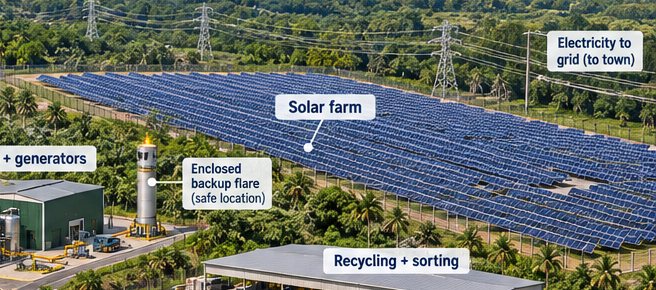
Solar + batteries
Installed in the first build phase. Solar is quick to deploy and predictable, so it carries the electricity service while the landfill matures.
How It Works
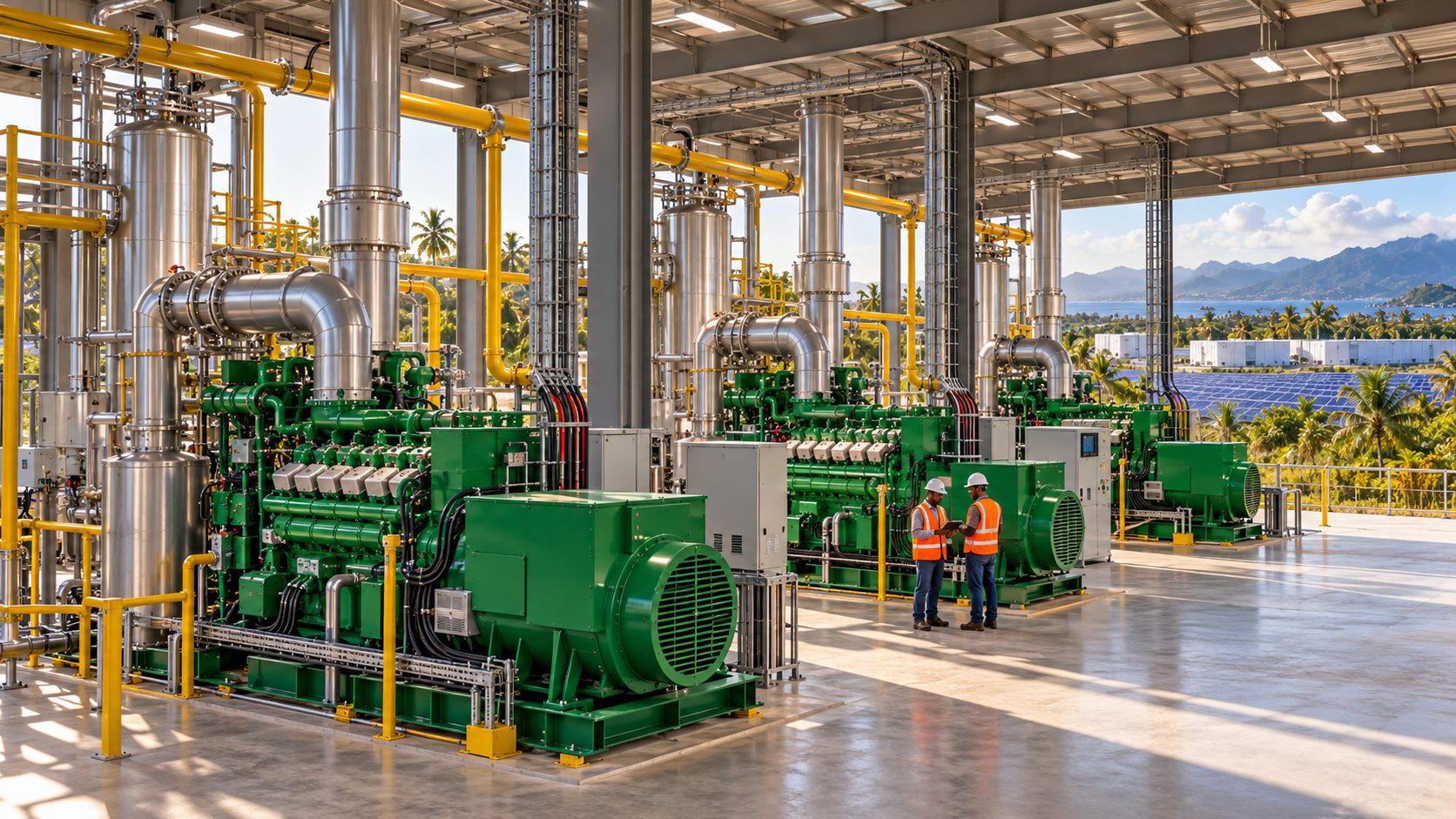
Proven technologies, put together in one place: collection, recycling, a sealed landfill that captures its gas, engine-generators, solar and storage.
The process
Residents and neighbourhood groups bring bagged waste to collection points and are paid by weight. Electric trucks carry it to the campus, where every load crosses a weighbridge — so we always know exactly how much waste comes in.
In the sorting hall, metal, plastics and other materials with buyers are pulled out and sold. These materials do not produce gas, so recovering them takes nothing away from power generation.
The rest goes into an engineered cell: compacted clay and a plastic (HDPE) liner underneath, drainage pipes to collect liquid, and daily soil cover on top. Full cells are capped.
Food, yard and paper waste break down without air and give off landfill gas — about half methane. Wells and pipes draw the gas out, and a cleaning system removes moisture and impurities that would damage the engines.
Clean gas fuels engine-generators. Their power joins the solar farm’s at the switchyard and flows out to homes and businesses. Batteries store solar energy for the evening.
Solar + batteries power the network from the first phase, day and night, while the landfill builds up its gas.
Two power sources
A new landfill takes time to build up its gas, so the two sources follow separate schedules.
Installed in the first build phase. Solar is quick to deploy and predictable, so it carries the electricity service while the landfill matures.
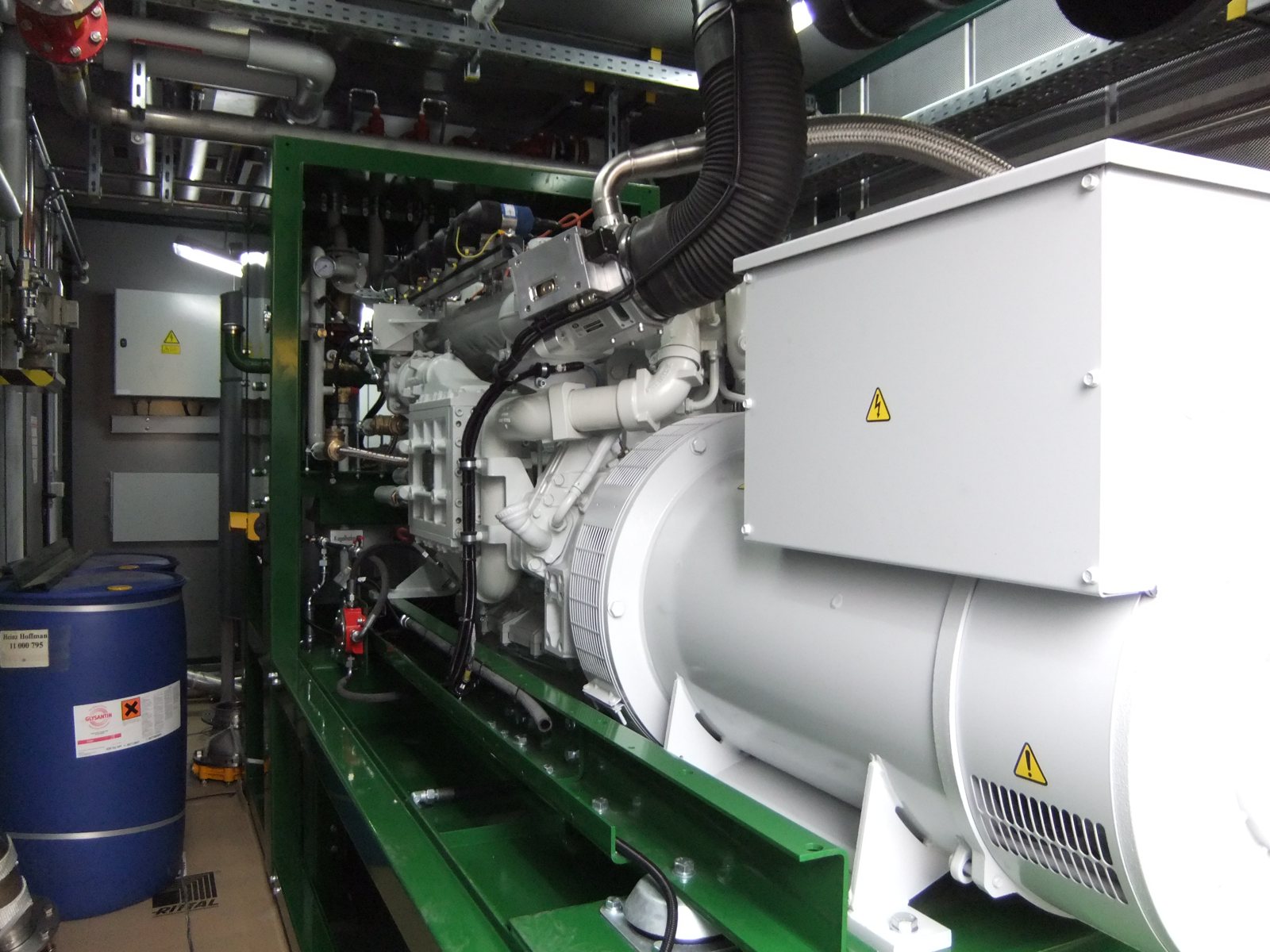
Added once the wells show a steady gas flow. Engines run day and night, which complements solar and reduces how much battery is needed.
Real photo: a gas engine-generator at a biogas plant in Germany. Landfill-gas plants use the same type of engine. Photo: AxelHirsch, CC BY-SA 4.0, via Wikimedia Commons
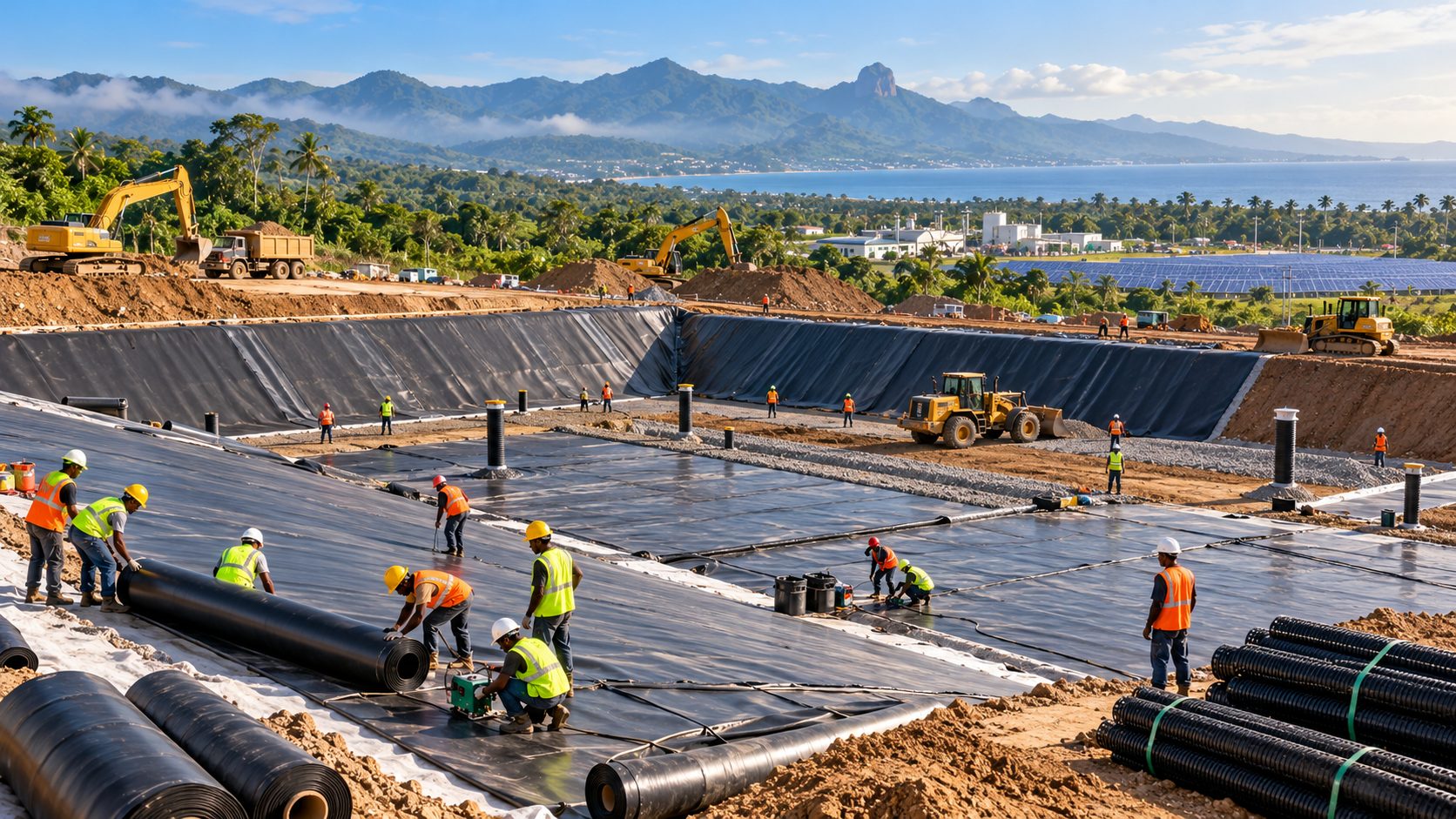
Protecting people and land
Background reading
Landfill-gas energy and utility solar are mature technologies used around the world.